
![]() |
![]() |
![]() |
![]() |
![]() |
| Astro Imaging | Double Stars | Novae and Supernovae | Variable Stars | |
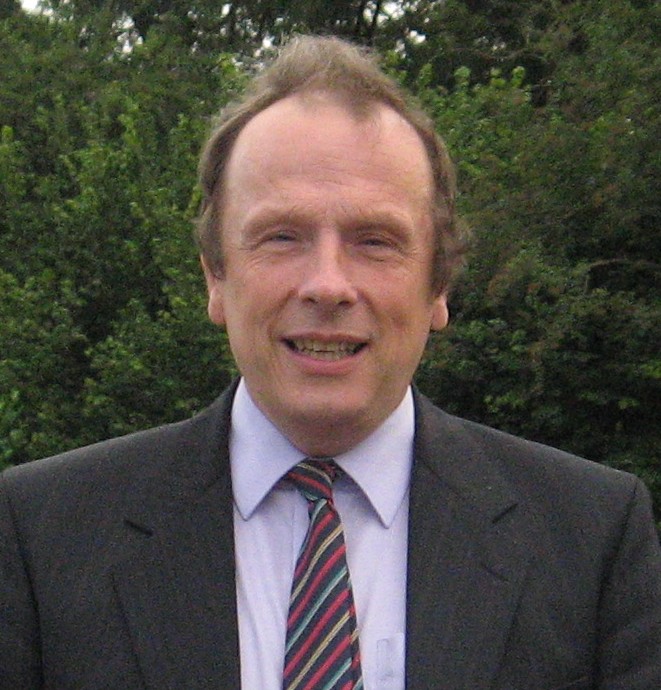
Just a little bit about me. I live in Daventry, a small town in Northamptonshire, England. I retired from teaching in 2005 and since then I have spent most of my leisure time on a wide range of astronomical projects. For a number of years most of my practical work was done using a 12" Meade LX200 that was situated in roll-off roof observatory in my garden. Sadly ever increasing light pollution has meant that all my work is now done over the internet using telescopes based in New Mexico.
In the days when the Meade was in use I concentrated on double neglected stars. As the Washington Double Star Catalogue website explains - "A large number of systems in the WDS may be characterized as ``neglected.'' These include unconfirmed binaries as well as systems which have not been resolved for many years. The reasons for this neglect are varied: poor coordinates or large proper motion (so the systems are ``lost''), erroneous magnitude or delta-m estimates (so the systems are skipped over or misidentified), or true neglect (too many binaries and too few observers). While the veracity of some of these systems is certainly suspect, many (if not most) of these are bona fide double stars." I observed 2,249 of these systems which put me, at the time of writing, in 7th place in the all-time list.
Using telescopes based in New Mexico has allowed my to carry out many projects that were previously not possible. The Remote Astronomical Society Observatory is at an altitude of 2,225 metres and at a latitude of 32° 54' 14" and longitude W 105° 31' 44. The telescope I use most frequently is a Takahashi Epsilon 250mm F/3.8 astrograph with a ST-8XE CCD camera mounted on a Paramount GT1100ME mount.
Since 2005 the majority of my observing time has been spent studying variable stars. Unlike many variable star observers I don't find monitoring cataclysmic variables particularly interesting and this is despite the many excellent web sites that exist. On the other hand the web site of the American Association of Variable Star Observers (AAVSO) has proved to be a fruitful source of fascinating projects.
Although I made a few variable star discoveries in 2005 - as reported in IBVS and a slightly larger number in the first half of 2006 - as reported in OEJV - I tended to drift between the different sub-sections of the hobby in a rather unstructured manner.
As is so often the case a short item on the WWW provided me with the spur to start work on what soon to became a major project. A short note from Northampton based John Greaves suggested a technique for discovering red variable stars and I have used his approach, with various modifications, throughout my work.
I have consistently spend more time on astronomical data mining than on practical observing and I have had varying degrees of success in the work I have done. For example I have managed to find 1350 previously unreported variable stars in the archives of the Northern Sky Variability Survey. These have all gone through a refereeing process and are now listed in the Variable Star Index maintained by the AAVSO. On the other hand my attempts to get my new double star discoveries listed have been unsuccessful.
It is much the same story with articles I have written. I have been lucky enough to have material accepted by the Journal of Double Star Observations, the Open European Journal on Variable Stars and of course the Webb Society and the British Astronomical Association. However some of the material I write receives little feedback - which rather implies that few people read it. Oh dear!
Read Martin Nicholson's Astronomical Blog
| Astro Imaging | Double Stars | Novae and Supernovae | Variable Stars | |
In collaboration with the Remote Astronomical Society Observatory
Martin Nicholson - Daventry, United Kingdom.
This page was last updated on October 8th 2007.
Martin Nicholson - Daventry, United Kingdom.
This page was last updated on October 9th 2007.