Page 1 Why Infra-Red Astronomy? - Page 2 Investigating possible projects - Page 3 Variable stars in the field of OO VUL - Page 4 The final project design
Project 2 - Infrared variables in the field of OO VUL
The link shown above and this article underpin the science behind this project. To summarise - out of 759 stars with a spectral class of M0 or later only 48 (mainly M0) were NOT variable. It therefore seemed a profitable line of research to identify and monitor these stars.
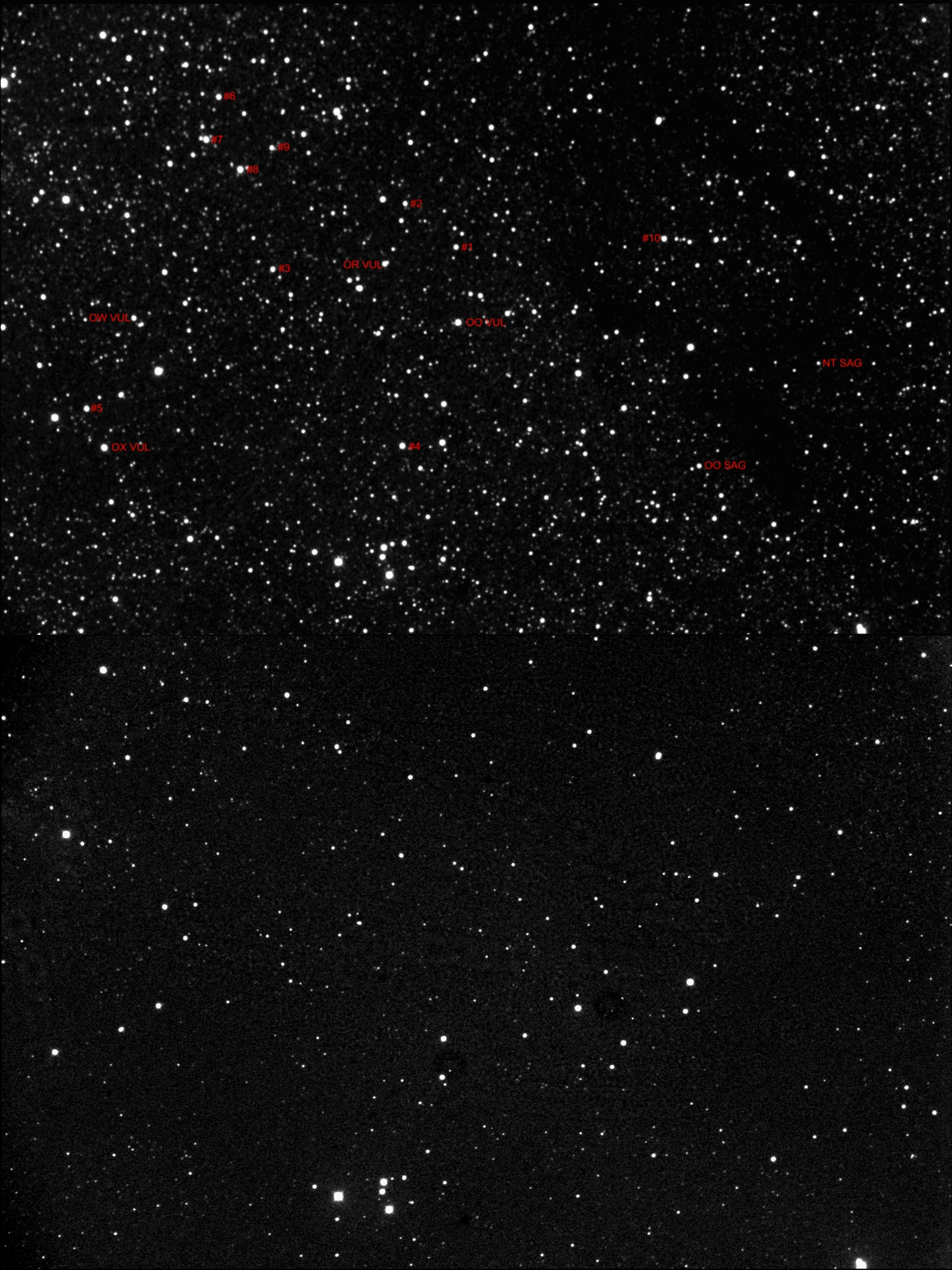
Animation of 120 second images in IR and V band
OO VUL was one of 123 Mira variables identified by Rosino and Guzzi in a deeply dust obscured 30 square degrees area of the sky. In their article the two authors concluded by saying :-
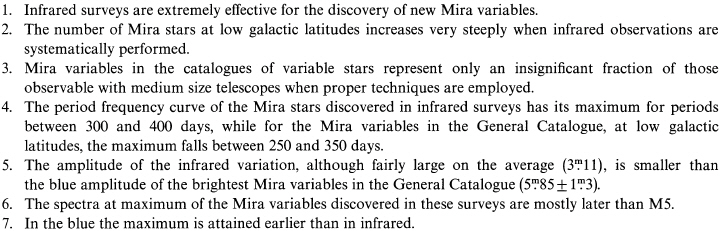
I have identified ten stars from a larger number of candidates that exhibit similar characteristics to the previously catalogued variable stars. That is that they are very much brighter in the infrared than in the V band. It has been suggested that the optically thick circumstellar shells absorb the optical emission of the central star and that this causes the observed effect.
Targets needing further study
| Number | RA | DEC |
| 1 | 19 21 02.62 | +20 06 58.0 |
| 2 | 19 21 14.80 | +20 09 40.6 |
| 3 | 19 21 48.79 | +20 06 12.5 |
| 4 | 19 21 18.63 | +19 55 27.2 |
| 5 | 19 22 37.13 | +19 58 33.9 |
| 6 | 19 22 00.17 | +20 16 29.6 |
| 7 | 19 22 03.84 | +20 14 00.7 |
| 8 | 19 21 55.71 | +20 12 09.9 |
| 9 | 19 21 47.50 | +20 13 20.9 |
| 10 | 19 20 10.43 | +20 06 48.9 |
Page 1 Why Infra-Red Astronomy? - Page 2 Investigating possible projects - Page 3 Variable stars in the field of OO VUL - Page 4 The final project design
In collaboration with the Remote Astronomical Society Observatory
Martin Nicholson - Daventry, United Kingdom.
This page was last updated on October 4th 2008.