Return to Martin Nicholson's Current Astronomical Projects
| Very Red and Infra-Red Stars | Short Projects and Targets of Opportunity |
This is intended to be a long duration but low intensity project since the target fields will only be imaged once or twice a month for a minimum of 18 months using 60 second exposures in the IR band. The target fields are of different types. Some are where there are high concentrations of known, but grossly under-researched, others are examples of the darker dust clouds listed in Dutra. These Dutra fields were chosen to be north of the celestial equator and of a size that would fit within a single image.
Data source and the link (that doesn't always work!) to a supporting article
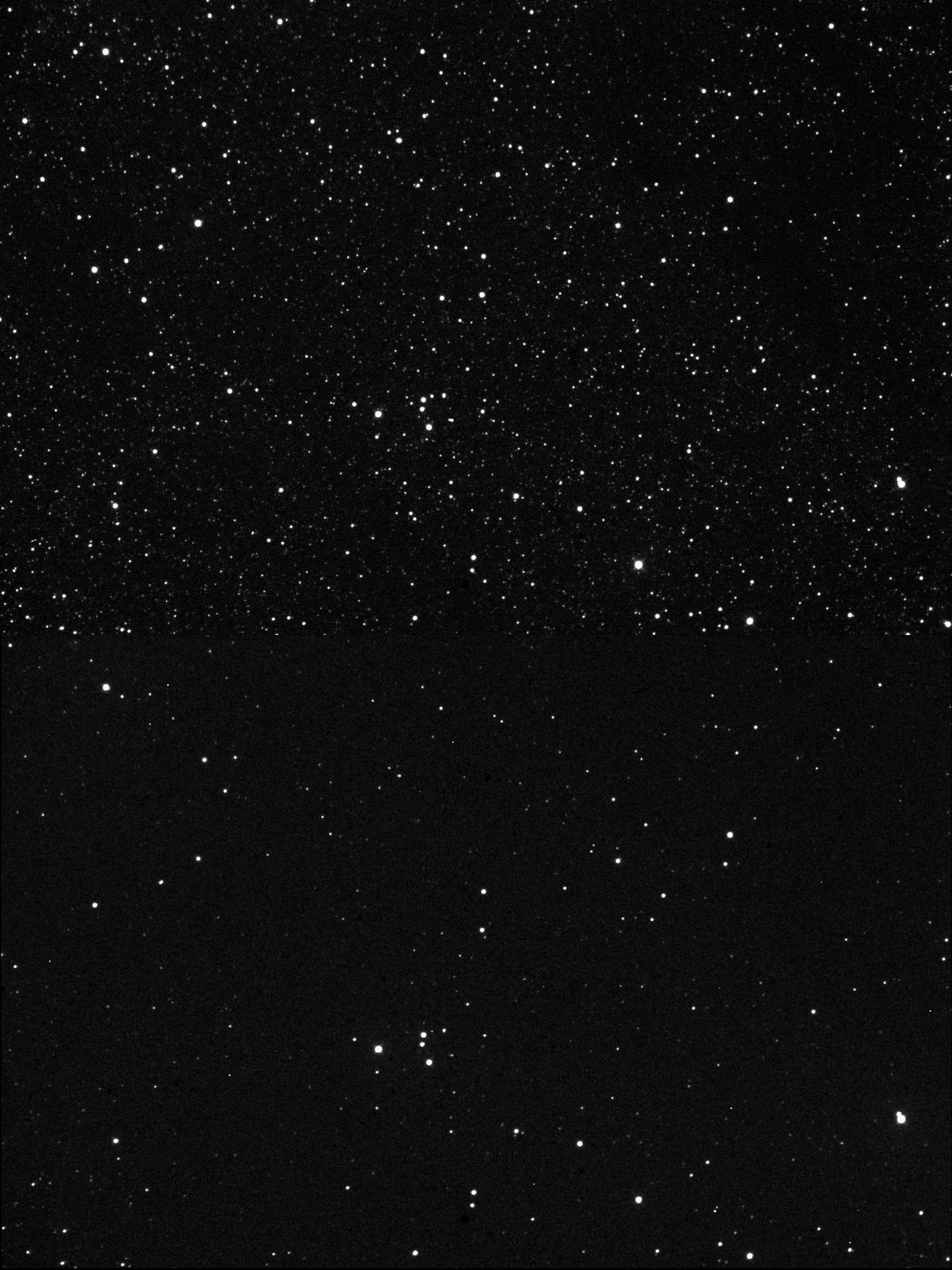
Trial exposure centered on GSC 1608:0634 on the Vulpecula/Sagitta border
120 seconds exposure in IR and in V band.
The most noteworthy feature of this image is the great increase in the number of stars when observing in IR. This part of the sky is well known for having high levels of inter-stellar dust and IR light penetrates the dust far more effectively than does green (V band) light.
Infra red light is also useful for detecting very cool stars and the best example of this would seem to be the star in the upper middle of the field which goes from almost invisible in V band to one of the brightest stars in IR.
The first batch of images were taken on the nights of 15/16 and 16/17 October 2007.
In collaboration with the Remote Astronomical Society Observatory
Martin Nicholson - Daventry, United Kingdom.
This page was last updated on February 23rd 2008.